
Sunday, May 21, 2017
Abibliophobia
This is a legitimate fear. (Although, I think it is the fear of running out of bookshelf space that plagues readers the most. For example, I will not run out of new books to read for another decade at least, my shelves already being packed with fresh books. The problem is that most of them are volume ones...)


Sunday, May 14, 2017
My people have a saying...
It
is seldom credited, but one sign of a great Fantasy author is when,
tucked comfortably within their works, are invented wisdom-sayings – i.e. proverbs; one could also call these little nuggets of wisdom. It is not a rule, of course, as one can easily be a master of the Fantastic without employing such things, but those who do have – at least in my experience – always been masters.
Unsurprisingly, among the first and finest examples of this is none other J.R.R. Tolkien himself. Here are some of the best examples:

Another fine example, and one who directly uses the term proverbs and makes them a more integral part of the story than Tolkien, is Mercedes Lackey. She literally created dozens for her invented Shin'a'in (People of the Plains) and Tale'edras (Hawkbrother) cultures. Lackey's proverbs are notable in that they are reminiscent to those of Ancient Asia – e.g. "Just because you feel certain an enemy is lurking behind every bush, it doesn’t follow that you are wrong" is like to "Before telling secrets on the road, look in the bushes."
Other fine examples of quotes from the wondrous world of Velgarth are as follows:
I have also heard that C. S. Lewis created a dozen proverbs in The Horse and His Boy, a book in his The Chronicles of Narnia series. However, as I have never read The Horse and His Boy I can provide no examples.
Unsurprisingly, among the first and finest examples of this is none other J.R.R. Tolkien himself. Here are some of the best examples:

"He that breaks a thing to find out what it is has left the path of wisdom."
"Valour needs first strength, and then a weapon."
"Faithless is he that says farewell when the road darkens."
"Perilous to us all are the devices of an art deeper than we possess ourselves."
"Often does hatred hurt itself."
Another fine example, and one who directly uses the term proverbs and makes them a more integral part of the story than Tolkien, is Mercedes Lackey. She literally created dozens for her invented Shin'a'in (People of the Plains) and Tale'edras (Hawkbrother) cultures. Lackey's proverbs are notable in that they are reminiscent to those of Ancient Asia – e.g. "Just because you feel certain an enemy is lurking behind every bush, it doesn’t follow that you are wrong" is like to "Before telling secrets on the road, look in the bushes."
Other fine examples of quotes from the wondrous world of Velgarth are as follows:
 |
| "My people have a saying..." |
"Knowledge will always be the best weapon against tyrants."
"Professionals are predictable, but the world is full of amateurs."
"You cannot have a battle without getting your fur in a mess."
"If it gets caught, it deserves to be eaten."
"That was then, this is now; the moment is never the same twice."
I have also heard that C. S. Lewis created a dozen proverbs in The Horse and His Boy, a book in his The Chronicles of Narnia series. However, as I have never read The Horse and His Boy I can provide no examples.
Monday, May 8, 2017
A return to Tremaris
The three moons rise.
 Just started The Taste of Lightning by Kate Constable, companion novel of her Chanters of Tremaris trilogy.
It is with great delight that I once again enter the lovely world of Tremaris, only this time following new characters. Regardless, I have been meaning to read this book for years now, and the real question has always been...will there be a connection to Calwyn & co. other than a familiar world map? Time to found out.

It is with great delight that I once again enter the lovely world of Tremaris, only this time following new characters. Regardless, I have been meaning to read this book for years now, and the real question has always been...will there be a connection to Calwyn & co. other than a familiar world map? Time to found out.
Friday, May 5, 2017
Just finished Court Duel
Just finished Court Duel, the second book of Sherwood Smith's The Crown & Court Duet.


So ends a fast-paced and charming adventure. What is not to love about a barefooted countess aiding in taking down a tyrant and, most importantly, bringing love and laughter to a palace full of courtiers whose minds are so full of the high strategy that they cannot see a another human beyond their livery? The overall lesson: Never let past misunderstandings impair relationships; better to overcome them before they catch up with and trip you in dangerous places.
My warmest wishes for a happy future to Meliara of Tlanth & Vindanric of Renselaeus, Branaric and Nimiar of Tlanth, Savona and Tamara, and all my other friends of Remalna. You saved the kingdom and the Hill Folk.
Saturday, April 29, 2017
The Neverending Story
It is less than 400 pages, yet is longer than Harry Potter. It
is less than 400 pages, yet the entire Fantasy genre is captured within
it.

My Father and I just finished The Neverending Story by Michael Ende.
How to describe a book that is unlike any other, that robbed us of words almost nightly? All I can say is that if The Neverending Story is the only Fantasy book one ever reads, then one can call themselves a veteran of the genre. All I can say is that Michael Ende ranks with J.R.R. Tolkien himself. All I can say is that we supped with the Golden-Eyed Commander of Wishes within the Ivory Tower and drank the Water of Life between the black and white snakes who encircle and yet are within the Glory.

My Father and I just finished The Neverending Story by Michael Ende.
How to describe a book that is unlike any other, that robbed us of words almost nightly? All I can say is that if The Neverending Story is the only Fantasy book one ever reads, then one can call themselves a veteran of the genre. All I can say is that Michael Ende ranks with J.R.R. Tolkien himself. All I can say is that we supped with the Golden-Eyed Commander of Wishes within the Ivory Tower and drank the Water of Life between the black and white snakes who encircle and yet are within the Glory.
All I can say is thank you to Bastian
Balthazar Bux and Atreyu of the Greenskins , to Falkor the luckdragon, to the The Childlike Empress
who accepts all as they are and never uses her power, to Grograman the Many Colored Death, to The
Old Man of Wandering Mountain, to Hero Hynreck and Hykrion, Hysbald and
Hydorn, and, last but not least, to Carl Conrad Coreander.
I beseech all to read this book, to join Bastion on his first steps. But I warn you that
I beseech all to read this book, to join Bastion on his first steps. But I warn you that
“If you have never spent whole afternoons with burning ears and rumpled
hair, forgetting the world around you over a book, forgetting cold and
hunger--
If you have never read secretly under the bedclothes with a flashlight, because your father or mother or some other well-meaning person has switched off the lamp on the plausible ground that it was time to sleep because you had to get up so early--
If you have never wept bitter tears because a wonderful story has come to an end and you must take your leave of the characters with whom you have shared so many adventures, whom you have loved and admired, for whom you have hoped and feared, and without whose company life seems empty and meaningless--
If such things have not been part of your own experience, you probably won't understand what Bastian did next.”
If you have never read secretly under the bedclothes with a flashlight, because your father or mother or some other well-meaning person has switched off the lamp on the plausible ground that it was time to sleep because you had to get up so early--
If you have never wept bitter tears because a wonderful story has come to an end and you must take your leave of the characters with whom you have shared so many adventures, whom you have loved and admired, for whom you have hoped and feared, and without whose company life seems empty and meaningless--
If such things have not been part of your own experience, you probably won't understand what Bastian did next.”
Monday, April 24, 2017
Literary kindred


I do not claim to be an avid reader of the Mystery genre –
aside from a few kids' books and, more recently, the acclaimed historical
murder mystery The Name of the Rose by Umberto Eco – but I have always
had the deepest respect for the genre. In fact, it is fair to say, I believe,
that Mystery and Fantasy are in fact literary cousins (with Sci-Fi being the
Fantastic's only closer relative; a sibling, presumably).
One states this because, while a Fantasy novel may employ
little mystery and a Mystery even less magic, both at their best utilize
strategy/tactics, good vs. evil with relatively high stakes, and
intellectualism. This is not to say that the two genres are not very different
in several key ways, but these shared traits prove that they are enough akin to
be called cousins. Further evidence of this is provided by the fact that
supernatural (i.e. magical/Fantasy) elements are not exactly unheard of within
the Mystery genre, and many a Fantasy author – such as J.K. Rowling – took
great pains to add elements of mystery.
"When you have eliminated the impossible, whatever
remains, however improbable, must be the truth."
- Sir Arthur Conan Doyle[1]
- Sir Arthur Conan Doyle[1]
"Caught between the riddle and its answer there is no freedom."
- Patricia A. McKillip[2]
P.S. And if one still remains unconvinced, the two genres share yet another element: Pipes! Seems to me that the Grey Pilgrim and the detective of 221B Baker Street would get along quite famously, what with the former blowing colored smoke rings and the latter creating a (and I quote) "poisonous atmosphere" of tobacco smoke.

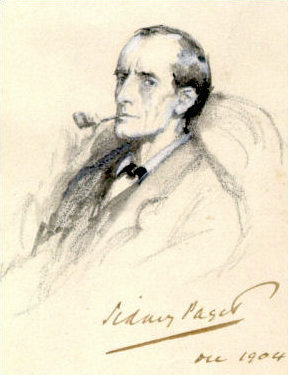
[1]
Author of the Sherlock Holmes books (the Mystery genre's The Lord of the Rings equivalent)
[2] American
author of fantasy and science fiction novels, which have been winners of the
World Fantasy Award, the Locus Award, and the Mythopoeic Award. In 2008, she
was a recipient of the World Fantasy Award for Life Achievement.
Saturday, April 15, 2017
The Palantír vs. Glass Candles
It appears that I have uncovered another leaf that GRRM took from Tolkien's book, a very subtle leaf that only one learned in the lore of Arda (Tolkien's fantasy universe) would spot amongst GRRM's thorns. And spotting, that it clarity of sight, is the exact nature of this discovery, for their is an unmistakable kinship between the Palantír of The Lord of the Rings and the Glass Candles of A Song of Ice and Fire.
 The Palantír were made by the Elves of Valinor in the Undying Lands, the acknowledge apex of civilization in Arda. Called the Seven Seeing Stones, they resembled large dark glass spheres with murky depths (but are in truth indestructible dark crystals) and with them those with the skill and will can gaze upon many things across the face of the world. Gaze and communicate with those looking into other, different, Palantír despite the Seeing Stones being scattered across the vast realms of Gondor and Arnor. These magical artifacts burn with a strange inner fire when used and were rescued from the Downfall of Númenor by Lord Elendil and his sons and taken to Middle-Earth where they were set up in various towers across the Realms in Exile.
 As to the Glass Candles, they were made in Old Valyria, the acknowledge apex of civilization in the world of A Song of Ice and Fire (see my comparison of Valinor and Valyria in my GRRM the Anti-Tolkien page). Like the Palantír they are dark, though of twisted and razor-sharp obsidian as opposed to smooth crystal, and it t is claimed that when the glass candles burn the sorcerers can see across mountains, seas and deserts, give humans visions and dreams and the ability to communicate with one another half a world apart. Sound familiar? Well, if not, then I should also say that these Glass Candles were rescued from the Doom of Valyria and give off twisted light when they burn. In GRRM's universe their most noted home is the Citadel, the great tower home and HQ of the Maesters.
Again this is a subtle point, but an unmistakable one, and illustrates well enough that George R.R. Martin may have borrowed more from J.R.R. Tolkien than is commonly believed.


Again this is a subtle point, but an unmistakable one, and illustrates well enough that George R.R. Martin may have borrowed more from J.R.R. Tolkien than is commonly believed.
Subscribe to:
Comments (Atom)